
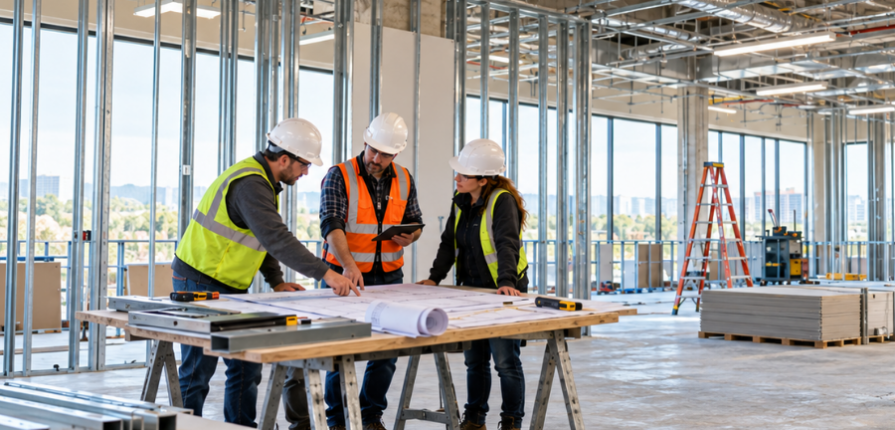
Renovating an occupied building creates different security demands from ground-up construction. Crews may be working behind temporary partitions while employees, tenants, or customers continue using other parts of the property. Entrances shift, corridors close, and a route that was part of normal building traffic yesterday may become part of the work zone tomorrow.
Those changes affect security well before the renovation is finished. At StarTec Communications Inc., we work with contractors and project teams throughout Eastern Massachusetts to coordinate commercial security and fire alarm systems around active construction so occupied areas can continue functioning as work progresses.
An Occupied Renovation Has Two Operating Environments
On a ground-up site, access is largely controlled by the construction team. An occupied renovation brings construction crews and building users onto the same property under different requirements. Contractors need reliable access to designated work areas, while occupants still need clear routes through the portions of the building that remain in operation.
Those boundaries can shift several times before the project is complete. Security planning should follow the construction schedule, including which doors remain active, where new routes are introduced, and how occupied areas are separated from work zones as each stage moves forward.
Temporary Access Still Needs Structure
Renovations often require additional entrances or short-term access for contractors and subcontractors. Those arrangements may only last a few weeks or months, but they still influence how people move through the property every day.
Access control can help project teams manage those changes without depending entirely on physical keys or informal arrangements. Credentials and permissions can be adjusted as crews rotate, work areas shift, and completed sections return to normal use. Keeping those permissions tied to the construction schedule also makes it easier to remove access when a contractor finishes their work or a door returns to its permanent role.
Planning an occupied renovation? StarTec Communications Inc. can help coordinate security and fire alarm systems around the work already underway. Call 781-740-7898 or contact our team.
Security Should Follow the Phasing Plan
A building can change several times during a phased renovation, which makes major construction milestones useful checkpoints for security. Project teams may want to revisit the plan when:
- A floor, wing, or suite closes for construction. Existing entrances and access permissions may need to change around the work area.
- A temporary entrance opens. Crews, deliveries, or occupants may begin using a door that previously saw little traffic.
- A completed area returns to use. Permanent access control, video surveillance, and other systems should be ready before occupants move back in.
- Construction moves into another area. Access requirements established for one portion of the property may no longer fit the next.
- The project approaches final turnover. Temporary credentials, routes, and security arrangements should be reconciled with the building’s permanent operating plan.
Fire Alarm Work Has to Account for Occupied Areas
Occupied renovations can put existing and new fire alarm work on different timelines. Part of the system may remain in service for occupied areas while devices, wiring, or equipment are being installed elsewhere in the building.
Testing, inspections, and commissioning therefore need to fit the construction schedule as work moves from one area to another. Coordinating those activities gives the project team a clearer path for completing fire alarm work and returning renovated spaces to normal use without pushing critical system work into the final days before turnover.
Finished Areas Need to Rejoin the Building Cleanly
Phase closeout should include the security and fire systems serving the renovated space. Access permissions may need to be updated, temporary credentials removed, camera coverage reviewed, and fire alarm work completed before occupants return.
Handling those items as part of closeout keeps short-term construction arrangements from carrying into daily operations. It also gives the owner a cleaner handoff because the finished space returns to use with its permanent systems already configured for the way the building will operate.
Keep Security Aligned With the Renovation
Occupied renovations ask a building to continue functioning while portions of it are being rebuilt. The security plan should move with the same construction schedule guiding the rest of the project.
Keeping access control, video surveillance, and fire alarm work connected to each stage gives contractors and building managers a clearer way to manage changing entrances, work zones, and occupancy. When the final construction phase closes, the permanent systems should already fit the building that is being handed back to the owner.
Planning work in an occupied commercial building? Call StarTec Communications Inc. at 781-740-7898 or contact our team to discuss the project.
Leave a Reply