
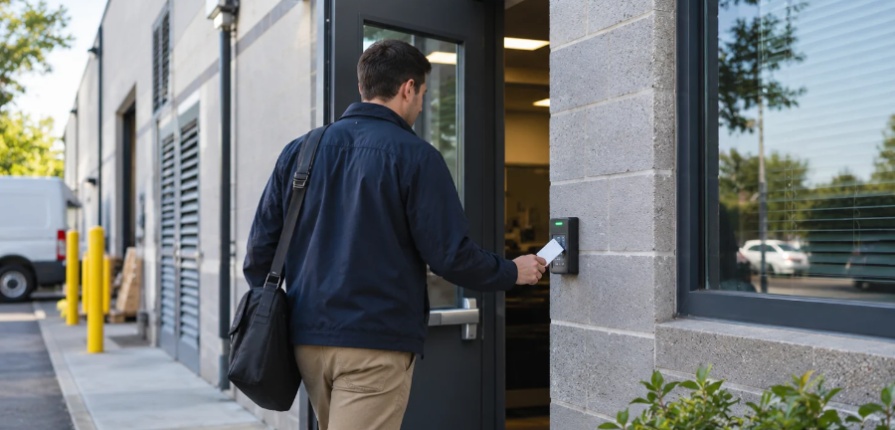
A secondary entrance can become part of a building’s daily routine without anyone formally deciding to make it a main entrance. Staffing shifts, departments move, deliveries change, and employees gradually begin using the door that makes the most sense for where they work.
The door itself may be unchanged, but the activity around it can be very different from when the security system was first configured. At StarTec Communications Inc., we work with commercial customers throughout Eastern Massachusetts to support access control, video surveillance, and commercial security systems as buildings and daily operations change.
Access Permissions Should Match How the Door Is Used Today
Access control permissions are usually established around the way a building is being used when the system is configured. If an entrance begins serving more employees or becomes a regular route for vendors and service personnel, the original permissions and schedules may no longer fit.
The employees using that entrance may need different access times, and people who previously had little reason to use the door may now pass through it every day. Reviewing the users and schedules associated with the entrance helps keep those settings aligned with its current role.
Camera Coverage Should Follow the Activity
Camera placement is typically designed around the activity expected in a particular area. When an entrance changes from occasional use to regular traffic, the camera may still be recording properly while the view itself no longer captures everything the facility team needs to see.
As traffic increases, the useful field of view may change as well, particularly around the doorway, approach, and areas immediately inside the building. Reviewing the existing camera position can help determine whether coverage still matches the activity taking place there today.
Has a secondary entrance become a bigger part of daily operations? Call StarTec Communications Inc. at 781-740-7898 or contact our team to review your current setup.
After-Hours Activity May Have Changed Too
An entrance that sees more daytime traffic may also be active outside the schedule it originally supported. Earlier arrivals, later shifts, or recurring service access can change when legitimate activity is expected around that part of the building.
That can affect both access permissions and intrusion programming. Reviewing the entrance against current operating hours helps ensure the system accounts for the activity that now belongs there after hours.
One Changed Entrance Can Affect More Than One System
When the role of an entrance changes, several parts of the security system may deserve attention at the same time:
- Access control: Do the right employees, vendors, and schedules still have access through the door?
- Video surveillance: Does the current camera view still cover the activity now taking place around the entrance?
- Intrusion protection: Do after-hours schedules and programming account for the entrance’s current use?
Reviewing those systems together helps the facility team understand how the entrance functions as a whole and reduces the chance of adjusting one part of the security plan while overlooking another.
Treat the Entrance Like the Entrance It Has Become
If a door that once saw occasional use now handles regular employee, vendor, or delivery traffic, it should be treated like the active entrance it has become. The equipment may already be in place, but the permissions, camera coverage, and after-hours settings still need to match what actually happens there today.
StarTec Communications Inc. works with commercial customers throughout Eastern Massachusetts to maintain and adjust the systems already protecting their facilities. If one of your building’s secondary entrances has become a regular part of daily operations, call 781-740-7898 or contact StarTec to discuss your current setup.